วันจันทร์ที่ 18 สิงหาคม พ.ศ. 2551

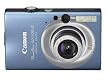
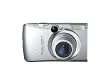
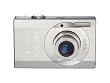
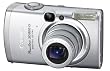
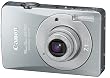
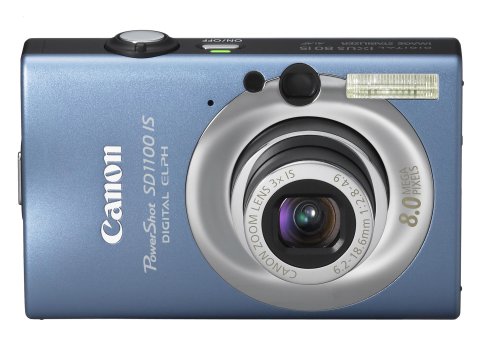
Canon PowerShot SD1100IS 8MP Digital Camera with 3x Optical Image Stabilized Zoom

Features:
  • 8.0-megapixel CCD captures enough detail for photo-quality 16x 22-inch prints
  • 3x optical image-stabilized zoom
  • 2.5-inch PureColor LCD II monitor
  • Face Detection; Motion Detection Technology automatically reduces blur
  • Captures images to SD memory cards (not included)

Product Description

Color communicates. It introduces you before you say a word, making the PowerShot SD1100 IS Digital ELPH the ultimate image-maker. Five fashion-forward hues expressed in pure aluminum add a new burst of excitement to Canon's Perpetual Curve design. Of course, a camera that brings out the best in you also delivers Canon's most advanced technology features. Call it style with substance, for a new level of picture-taking pleasure.

Review

The former Canon PowerShot SD1000 7.1MP Digital Elph Camera with 3x Optical Zoom (Silver) was the perfect tiny camera that you could slip into your shirt pocket and bring out at a moment's notice and begin clicking away. No wonder it has been Canon's top selling model! It was almost perfect except it did not have image stabilization like some other Canon cameras. And now with the SD1100IS Canon has added it's motion detection technology to this tiny camera which will make your shots less blurry, especially in low light.

Other enhancement over SD1000 is a slightly rounded styling which feels more comfortable in the hand and gives you a better grip. You can also choose from fun colors - Bohemian brown anyone? Since teenagers (and adults) love this little camera, adding colors is a nice touch.

I have several Canon cameras and I use them regularly, but once again the SD1100 gets a lot of use as it's easy to carry in your tighter jean pocket/shirt pocket.

What else is nice about the SD1100 IS?

It takes excellent outdoor shots and has a satisfactory low light performance for its size. The face detection and auto white balance in the frame help expose faces correctly. It has a viewfinder in case the sun is too bright and an anti-reflective 2.5" screen. You can also use your high capacity SD cards in this baby.

With this camera you can get creative with "My Colors" features. The Color Accent mode where you keep any one color in the picture while the rest is black and white helped frame a blue sky, blue sea and blue jeans in a b/w group shot. Cool! There are options to swap colors and also take b/w or sepia pics. Read the manual and you'll discover even more fun features.

The Scene modes are tried and tested and help you take the best picture. I love "foliage" which brings out the greens or autumn colors. "Fireworks" freezes the bursts of firecrackers in the sky in perfect spheres. "Aquarium" helped me take wonderful shots of fish, before this mode all I got was my flash reflecting on the glass of the tank. The others modes - indoor, beach, snow, kids/pets have been useful too.

The video mode takes movies in 3 different sizes and it has a time lapse video function. You can set the camera to record at intervals. I used it to capture sun's ascent from sunrise to mid morning and the video looks fabulous. You can even use the creative colors modes while taking video. The image stabilization helps in the video mode eliminating jerky shots.

The bottom line? This is a great camera - it's take-along-everywhere tiny, it's got a ton of creative features and takes great pictures, it also comes in fun colors. It's the one to get!

Check the cheapest price at Top-BuyersGuide.com

วันอาทิตย์ที่ 17 สิงหาคม พ.ศ. 2551

Top Ten Canon ELPH Models

Here's the list of the top ten bestselling Digital Camera, Elph models. Any of the first six are your best choices:

1ST PLACE: SD1100 IS

An update to the SD1000 (see below), this 2008 8MP beauty adds image stabilization, a slightly longer zoom (38-114 mm), another MP of photo size and a small indent on the right side for a better grip. Plus it comes in colors! My daughter has a blue one and uses it every single day. During school days the image stabilization made a real difference in her on-the-bus shots. With that heavy of use hers has gotten scratched up a bit, but the marks are small and hardly noticeable.

2ND PLACE: SD870 IS

The ELPH to buy if you want a wide-angle lens. Slightly thicker than the SD1100 IS, this 8MP model doesn't have an optical viewfinder which makes it tough to use in bright sunlight, otherwise there's little not to love. My husband uses one as a comp camera, to compose shots for the travel guide "The Complete Guide to Walt Disney World."

3RD PLACE: SD770 IS

Just released in May, this 10 MP model is, in a way, an update of the SD1100 IS (see above). I rate it lower because it has a plastic body and doesn't come in colors. On the other hand, it has a longer battery life than the 1100 and features an improved LCD screen that is very easy to view. As for photo quality, I can't tell the difference.

4TH PLACE: SD950 IS

There's a lot to like in this 12.1 MP camera. First off, it's gorgeous. The body, though a little thick, is titanium. An upgrade to the SD850 IS (see below), it has a 3.7x zoom lens and adds manual controls as well as the ability to stitch together panoramic images. The only reason I don't rate it higher is the price.

5TH PLACE: SD890 IS

Want a long zoom lens? Here's your baby, a 10 MP model with a 5x zoom. Also has the new bright LCD screen and all the other 2008 Canon goodies. The most expensive Canon PowerShot ELPH.


6TH PLACE: SD790 IS

With the same 10 MP image sensor and 3x zoom lens as the SD770 IS, this new model stands out only for its larger 3-inch LCD display and, as a result, lack of optical viewfinder. The rear controls are different, too, with a flatter design that uses fewer buttons.


7TH PLACE: SD1000

In my opinion there's no reason to buy this 7.1 MP model. Released in 2007, it's been replaced by the SD1100 IS (see above). The SD1000 is a fine camera but it doesn't have image stabilization, a key feature of the 2008 lineup.


8TH PLACE: SD850 IS

The ancestor to the SD890 IS, this 8 MP Elph combines a 4x zoom and 8 MP photo size with an image stabilizer. Every button, dial and switch has a quality feel. Slighter larger than the other models here, it is a little tougher to pop in and out of your pocket, but if you have larger hands it may be just what you are looking for.

9TH PLACE: SD800 IS

This 7.1 MP predecessor to the 870 doesn't focus well at its edges when set at its widest angle. Still, it's good training for someone who wants to compose like a pro.


10TH PLACE: SD750

The 2007 PowerShot flagship offers a light meter that adjusts for facial brightness, 17 shooting modes, some first-rate movie features and red-eye correction -- features that were innovative a year ago but are common in Canon's 2008 models. No image stabilization; no optical viewfinder.

วันพฤหัสบดีที่ 14 สิงหาคม พ.ศ. 2551

Canon Digital Rebel XSi 12MP Digital SLR Camera with EF-S 18-55mm f/3.5-5.6 IS Lens

Features:

  • 12.2-megapixel CMOS sensor captures enough detail for poster-size, photo-quality prints
  • Large 3.0-inch LCD display; includes Canon's EF-S 18-55mm, f3.5-5.6 IS zoom lens
  • DIGIC III image processor provides fast, accurate image processing; improved Autofocus and framing rate
  • EOS Integrated Cleaning system, plus Dust Delete Data Detection in included software
  • Stores images on SD/SDHC memory cards (not included)

Product Description

For stunning photography with point-and-shoot ease, look no further than Canon's EOS Rebel XSi. The EOS Rebel XSi brings staggering technological innovation to the masses. It features Canon's EOS Integrated Cleaning System, Live View Function, a powerful DIGIC III Image Processor, plus a 12.2-megapixel CMOS Sensor. The EOS Rebel XSi's refined, ergonomic design includes a 3.0-inch LCD monitor, compatibility with SD and SDHC memory cards and accessories that enhance every aspect of the photographic experience.

My journey with DSLRs began back in 2003 with the original Digital Rebel. DSLRs changed my photography for the better like nothing else. Five years and some 25,000 shots later, it's still going strong. Along the way I upgraded to the Canon 30D, which is a fantastic camera as well. When the 40D was announced, I decided to wait until the 50D sometime in 2009, but wanted a newer backup/second body for my photography needs. So when the XSi/450D was announced, it sounded like a perfect fit for my needs.

I got it from Amazon.com three days ago, and have given it a pretty good workout since then, having shot about 650 shots under a variety of shooting conditions and with a number of different Canon and third-party lenses. The following are my impressions.

The build feels very good. The camera feels wonderfully light yet well built. I'm 6ft tall with average size hands, and the camera feels good in my hand. The battery grip, to me, defeats the purpose of having a small, light DSLR, so I opted for a Hakuba/Opteka grip (it's a plate that screws into the tripod socket that enables you to use the excellent Canon E1 hand strap with it) and I couldn't be happier. I'm not a fan of neck straps, so this works well for me (see the uploaded photo for the configuration).

Most of the menu buttons on the back feel different from the ones on the original Digital Rebel and the 30D; the XSi buttons feel more tactile and have a definite "click" to them when you press them. The exception are the Exposure Lock (*) and AF selector buttons, which have retained the deeper, softer feel of the older cameras. Just different, not better or worse, for me.

The LCD is now 3" with 230K pixels. The playback images look great, and probably because of the higher resolution of the sensor, there's a very slight delay when you zoom in to 10x while the image loads and displays properly. People coming from other cameras or brands might not even notice it--I only did so because of the difference between it and my two other Canon DSLRs (which have lower resolution sensors). The viewing angle of the LCD screen (how clearly you can see the screen from side and up and down) is excellent; you can still see the screen holding the camera almost straight up for an overhead shot (more on this later). I'd estimate the viewing angle is about 160-170 degrees both horizontally and vertically.

The Digital Rebel has a separate status screen above the main LCD screen, and the 30D had one on top of the camera, so I wasn't sure if I was going to like the big LCD acting as the status screen and no top screen. I'm happy to say that this arrangement works well, at least for me. The back screen makes it really easy to take all the settings at a glance. The viewfinder is much larger and brighter than that in the Digital Rebel. A humongously welcome feature for me is the always displayed ISO value in the viewfinder.

The camera is only 1/2 of the image quality equation, the other being the lenses being used. Coupled with my favorite lens, the Canon EF 70-200mm f/4 L telephoto lens, the XSi turns out fantastic images. The supplied kit lens is very light and compact for being an image stabilized lens, and turns out good performance. The IS is certainly very useful.

Two features that used to be missing from the Digital Rebels and found in the more expensive DSLRs are now featured in the XSi: spot-metering and flash exposure compensation (these may have been available in the previous Digital Rebel model, the XTi, as well). The inclusion of those two features make the camera a much more complete and compelling photographic tool. The timer function now has a custom mode, where it'll count down from 10 seconds then take a number of shots (specified by you) in succession. No more running back and forth to reset the timer after each shot! There's also the traditional 2-second timer.

Let's talk for a minute about sensor and the ISO values. XSi/450D has five ISO values you can choose: 100 (best image quality), 200, 400, 800, and 1600. Higher ISO increases the camera sensor's sensitivity to light, thus you can achieve faster shutter speeeds for a given lighting condition. However, the trade-off is that the sensor "noise" (think grain for film photography) increases with higher ISO, so you get a degraded image quality in return for less blurred photos from hand shakes (thanks to faster shutter speed). This may come in handy in situations where flash photography is not permitted, such as a museum or a concert or theater. HOWEVER, compared to point-and-shoot digital cameras, the larger sensors of DSLRs, including the XSi, means that even at ISO 800 and 1600 you get very usable images right out of the camera. Running the images shot at those ISO settings through any number of third-party noise reduction software will improve them even further.

This ties in to another very useful feature of the XSi/450D that makes life easier for the photographer: The Auto ISO function. By default, Auto ISO sets the ISO (the sensor sensitivity to light) between 100 and 800 (by using custom functions, this can be changed to 200-1600). If you are, for example, shooting your kid's indoor basketball game and you know that you need a shutter speed of at least 1/200 sec to "freeze" the action, then you can set the camera to Tv (shutter priority mode) and set the value to 1/200, and set the camera to Auto ISO. Then the camera will match the aperture and the ISO to achieve proper exposure at that shutter speed. With my other DSLRs, setting the camera to shutter priority only allowed the camera to adjust the aperture value; ISO setting had to be adjusted manually. With the XSi/450D, the ability for the camera to adjust the ISO value automatically makes it one less thing for you the photographer to worry about.

I've only tested the Live View function to see how it works, but I can already see how useful it's going to be in studio and macro shootings. Just a note, you can't half-press the shutter to autofocus while in Live View mode. You can either manual focus, or use one of the two autofocus methods, quick (the mirror flips up, the LCD goes dark for a short while, and flips down with focus locked) or live (the camera uses the LCD's contrast detection to achieve the focus--this method is slower than the quick method), both by pressing the exposure lock button (*) while in the Live View mode. Using either the RS-60E3 wired remote or RC-1 wireless remote in Live View mode will ONLY trigger the shutter, and has no bearing on focusing.

Some people seem to be under the impression that the inclusion of the Live View feature will enable them to use the XSi/450D as they do point-and-shoot digital cameras, to compose their shots. That is not the case. You can't really make a functioning use of the Live View feature unless the camera's securely mounted on a tripod or on a flat surface. Both Live View focusing modes, while precise, are too slow to be used for hand-held shooting.

Having said that, there is one use of Live View in hand-held shooting that I've come to value. When shooting overhead or over an obstacle, I can, with the same hand holding the camera, trigger the Live View, compose the scene through the LCD monitor (even if it's out of focus, it's easy to get the general framing right), disable Live View, and take the photo normally. With a little practice, this can be accomplished very quickly. Very handy when you're just holding the camera overhead and hoping for the best.

The Direct Print button that's been much ridiculed and maligned in most Canon cameras now double as the white balance menu button. The Set button in the middle of the four-direction arrow keys can be programmed for a number of different functions: Change image quality, flash exposure compensation, LCD monitor on/off (same as Display button, but can be triggered by the same hand holding the camera), and Menu display (again, can be triggered by the same hand holding the camera).

There is a dedicated ISO button, which is also very welcome. It can easily be accessed during shooting with the right thumb, thereby minimizing the interruption to shooting.

The battery life seems very good. I've shot about 500+ shots on a single charge and the status monitor is still showing charge at full.

I'm using Transcend 8GB Class 6 SDHC card with it. At ISO 100, the camera reports it can fit 396 RAW+JPG (highest quality) on it, but in reality it can probably fit about 420-450 (the camera's always conservative when estimating). With RAW only, it can fit 507. With highest quality JPG, it can fit 1,822. Note that as ISO increases, so do the file sizes and thus you can store less images per card. For example, on ISO 1600, the same card can only hold 323 images, compared to 396 at ISO 100.

My only gripe, and this is more about me than the camera, is the RAW+JPG buffer. I always shoot RAW+JPG, and the buffer will only hold four images at that speed (this is a limitation that's built into the camera's memory buffer system, and thus using a fast memory card doesn't help--see p.64 of the manual). When the buffer's full, you can take two additional images at about a frame a second, then have to wait until the buffer empties (finishes writing to the memory card). When shooting RAW only, it's 6 images. When shooting JPG only, then it's no problem at more than 50 frames. I've found myself switching the mode dial to Sports mode when I'm shooting a fast-moving subject and the buffer simply can't keep up with it. Well, that's why Canon produces different grades and ranges of DSLRs.

I've uploaded some photos that I shot of the local wildlife. Most if not all of those were taken with the EF 70-200mm f/4 L lens.

All in all, it's a fantastic camera. Pretty amazing to see how far the entry-level DSLRs have come in just a few years in terms of features, interface, ergonomics, and quality. I'm very pleased with my purchase and intend to have lots of fun shooting pictures with it.

Check the cheapest price at Top-BuyersGuide.com
วันอาทิตย์ที่ 10 สิงหาคม พ.ศ. 2551

Canon PowerShot A590IS 8MP Digital Camera with 4x Optical Image Stabilized Zoom

Product Description


8-megapixel effective recording * 2-1/2" color LCD screen * real image optical zoom viewfinder * 4X optical zoom (4X digital/16X total zoom) * 35mm equivalent lens focal length: 35-140mm * optical image stabilization * top JPEG resolution: 3264 x 2448 *

Features:

  • 8.0-megapixel CCD captures enough detail for photo-quality 16x 22-inch prints
  • 4x optical image-stabilized zoom
  • 2.5-inch LCD screen; Face Detection
  • New Easy Mode simplifies operation
  • Captures images to SD memory cards (not included); powered by AA batteries

Review:

I own a DSLR and consider myself a photography enthusiast. I wanted a small compact camera with me when I don't want to lug around my DSLR + lenses and equipment. After a previous good experience with the Canon A720 IS, the new A590 IS seemed like a good choice. Since I'm an advanced photographer, I'll focus on the advanced features of this camera. The auto modes work as well as any other camera in its class, but the extensive manual features is what sets apart the Canon A series. What I like about the camera:

+ Compact, stylish. It's smaller than older A Powershots, and the dark grey color gives it a seriousness compared to the typical bright silver finish.

+ Image stabilization works very well, it allows me to take blur-free photos 2-3 stops below the recommended shutter speed, that means at 35-50mm f2.8 1/10 sec shots are CONSISTENTLY possible indoors without using flash.

+ Good image quality. Expected from Canon, but even better is adjustable contrast, saturation, and sharpness settings, along with the typical JPG compression and resolution sizes.

+ Fast and responsive. I was surprised how responsive this camera is even compared with my DSLR. Shutter lag is very low for a compact digicam, and when I pre-focus with manual focus, it's even faster.

+ Manual modes. Aperture priority and shutter priority are great, the M mode is even better than other A Powershots such as the A720 because now there's a light meter on the right side that adjusts live based on what the camera thinks is the optimal exposure setting. And you can adjust aperture/shutter speed and see how it affects the final exposure. Ideally a live histogram would be even better, but this is very handy.

+ Manual focus. Although the LCD resolution is not good enough, even with the point zoom option, manual focus helps in close-up work and pre-focusing for action or creative photography.

+ Manual flash modes. In addition to automatic flash. The manual flash allows me to adjust the flash power in 3 levels, and prevents a pre-flash. This last part is important for using a remote optical slave flash. I can basically take professional looking studio pictures with this camera with my external flash equipment.

+ Optical viewfinder. I don't use this much yet, but can come in handy in bright sunlight conditions, or when battery conservation is needed.

+ Battery performance seems improved over previous A powershots too. The official specs give it 220 shots on regular alkalines and 500 on rechargeable NiMHs. Good news is they use common AA batteries that you can buy anywhere instead of proprietary models with specific chargers.

Now the negatives. I hope Canon can improve these aspects in their future models.

- Slow flash recycle times. This is to be expected from a camera that takes AA batteries. Would be nice if the LCD didn't blank out after a full flash discharge. Not a big deal since I use an external flash anyway, and the camera's flash is manually set to medium output as trigger (so recharge is faster). I would not want to give up the AA battery convenience for a faster flash recycle time though.

- Higher resolution LCD. The 2.5" 115k resolution LCD is ok for framing and casual browsing, but higher resolution would be nice.

-Live histogram while shooting. This feature is available when reviewing a photo, but not live. Other manufacturers have implemented this, and Canon should also, especially since the unofficial CHDK software mod allows such a feature.

- Larger aperture would be nice. Such as f/2.0 (instead of f/2.6) at the wide end, and f/4.0 (instead of f/5.5) at the telephoto end. That way a lower (& less noisy) ISO can be used in dim conditions or when fast shutter speeds are needed to freeze action. All the electronics in the world can't replace a good large lens. Also allows more creative depth of field control.

- A wider wideangle would be nice, 28mm instead of 35mm (35mm equiv). I'd rather see a wider wideangle than a longer zoom.

- Video feature is not ideal. Optical zoom is not available during recording of video. And the more efficient MPEG4 compression is not used, so video files tend to be large. Also noticed at 640x480 resolution, the highest fps is now 20 instead of 30 from other A models. A definite step backwards.

- Noise at higher ISOs. This is due to the smaller sensor on compact cameras. But 8 MP is probably the most pixels that can be crammed into a small 1/2.5" sensor. I'd rather have a cleaner picture at 6-7 MP than a noisy 8 MP picture. And if in-camera noise reduction is used, I'd like to see an adjustable setting for how much is being applied.

- And if I were to be really critical: There's no indicator of what optical zoom level I'm at. Slight image noise is noticeable even at ISO 80 when I zoom in really close on a monitor view. When at the widest angle & aperture, there's slight barrel distortion and blurriness on the corners. Not many compact cameras can do better in terms of image quality, but I'm pointing them out here because even though this camera beats most of the competition, it still has room for improvement.

So overall it's a great camera for the price. Offering great image quality with the auto settings for the casual user, but also a powerful set of features for the more advanced photographer.

Check the best deal for Canon PowerShot A590IS at TopBuyersGuide.com

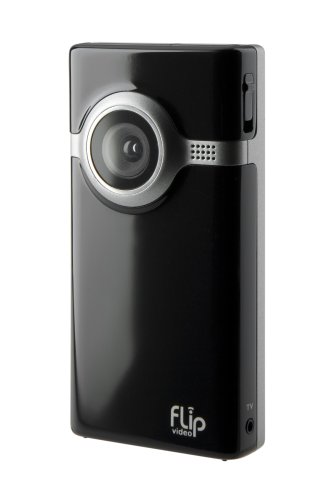
Flip Video Mino Series Camcorder, 60 Minutes

Features:
  • Pocket-sized camcorder; Flat back panel with touch-sensitive buttons; 1.5-inch color LCD screen
  • 2 GB of on-board flash memory--records up to 60 minutes of video; 2x digital zoom
  • Internal Lithium-ion battery recharges when built-in USB arm is connected to a computer
  • Connects to TV for instant viewing
  • Built-in software lets you easily edit video files and upload them to video sharing sites

Product Description

Mino is a camcorder that goes anywhere. Simply put it in your pocket! Then easily share your video on the web on MySpace, YouTube, and AOL.

Weighing in at just over three ounces, the remarkably slim yet powerful Flip Video Mino raises the bar for high-quality, portable, and easy-to-use video. Smaller than most cell phones, Mino fits neatly into a jeans pocket to capture life's stories whenever and wherever they happen ? at a party, a concert, the beach, even on a bike ride. The Mino also features Flip Video's built-in software that lets you simply plug the camcorder's signature flip-out USB arm into any computer for immediate editing and sharing. For the first time, the Flip Video software lets you easily upload video directly to MySpace as well as to YouTube and AOL Video, making it even easier to share video. In addition to quickly posting videos on sharing and social networking sites, they can email videos and video greeting cards; create custom movies with their own music; capture still photos from video; save and organize videos on the computer; and, for the first time, seamlessly order and send DVDs anywhere in the world. Custom editing of movie mixes, with the option to set them to your own music Capture of still photos from video Order DVDs online and have them shipped anywhere in the world TV connection for instant viewing (cable included) Tripod mountable Internal rechargeable battery delivers up to 4 hours of use between charges Unit Size is only 3.94 x 1.97 x 0.63 HWD

Review:

The Flip Mino is a great small camcorder for the price, mainly because of the form factor. It's a lot thinner and smaller than the Flip Video Ultra Series Camcorder, 60-Minutes (White), yet yields equal performance. The only negative is that it doesn't take AA batteries like the Flip Ultra because it's so thin. Instead, it has a non user replaceable built-in lithium ion battery like an iPod.

The Flip Mino does not neccessarily replace the Flip Ultra and the Flip Ultra is being sold side by side with the Flip Mino. And, the Flip Mino doesn't come in as many colors, only a black version and a white version.

I would say If you already have a Flip Ultra, you may not want or need to buy the Flip Mino (unless you really want the smaller form factor or you have money to burn) since it yields about the same video and audio quality. If you don't own a Flip video camera yet, the Flip Mino is probably the one to get unless you require AA batteries which admittedly is nice because they are readily available everywhere. I actually prefer AA batteries over an internal rechargeable battery that over a few years will start to lose it's charge and not last as long between charges.

That said, the Flip Mino is pretty nice because it's so small and thin.

Even though I have a digital point and shoot still camera that can shoot video, I find it easier to shoot video with the Flip Mino. The vertical form factor is better suited to shooting video. The built in software is nice and it's built into the camera so you need not install anything on your computer.

The Flip Mino is a great 'take everywhere' video camera that fits in your pocket and can yield some creative and endearing videos.

วันเสาร์ที่ 9 สิงหาคม พ.ศ. 2551

Canon PowerShot SD750 7.1MP Digital Elph Camera with 3x Optical Zoom

Features:
  • 7.1-megapixel CCD captures enough detail for photo-quality 15 x 20-inch prints
  • 3x optical zoom; ISO 1600 and High ISO Auto, 3.0 PureColor LCD
  • DIGIC III Image Processor; Face Detection AF/AE
  • Selectable shooting modes and special scene modes
  • Print/Share button makes direct printing simple

Product Description:

Canon's iconic ELPH design achieves a stunning new evolution with the PowerShot SD750 Digital ELPH. Utterly simple edge lines and cut surfaces gleam subtly with high-grade finishes. Of course, style means little without substance, and here the SD750 Digital ELPH more than delivers. 7.1 megapixels and DIGIC III create magnificent images, while exciting advanced technologies include Face Detection, Red-eye Correction, and time-lapse movies. Always sized to go, the SD750 Digital ELPH is now extra-durable, with a tough scratch-resistant coating on its anti-reflective, brilliantly colorful 3.0-inch LCD screen.

Review:

Canon resumes its position at the top of all camera manufacturers. Their design, performance, and quality is hard to match. Now onto the camera:

I have shot around 4-5 Gigs worth of photos in various settings, so I have a good idea of what this camera has to offer. The features itself within the camera are excellent. Aside from increased megapixels, it's not much different than the SD700 except for some odd reason, Canon decided to opt out of the IS (Image Stabilization) feature. I almost gave it 4 stars based solely on that aspect. But other than that, the camera is brilliant.

For portraits and close-ups, the Face Detection feature is phenomenal which is a reflection of the new DIGIC III technology. The camera will lock in on the human face or multiple faces (I've locked in up to 8) and keep it in focus no matter where you move or pan the camera. And if you're shooting indoors or in low-light, the ISO can be set as high as 1600 so you have a lot of Flash Exposure control if you don't like that spotlight look when using the flash. There is also an Auto ISO setting which gives the user a lot of range to shoot. It will determine proper ISO setting and shutter speed and also will predict camera shake resulting in less blurry pictures. I guess this makes up for not having IS. :)

If you are a novice photographer and don't like to mess with ISO, aperture settings, and shutter speed variations this camera will fit your needs just fine. It has 17 shooting modes including "scene" modes for the different settings you may be shooting in such as the beach, fireworks, snow, portraits, night, etc. Fully automatic so any beginner can pick up this camera and shoot like a pro.

The most popular feature has to be the 3" LCD screen. It's ginormous. But in order to get that big of a screen on such a compact camera, Canon forgoes the optical viewfinder. So if you're a viewfinder shooter, then you may not like the fact you are limited to just the LCD screen for image framing.

One shortcoming of the camera is that it still has a weak zoom. 3X optical is nothing and so the zoom feature is pretty much non-existent.

The movie features on the camera are awesome. i like the Time Lapse movies where you can record time lapse of up to 2 hours and condense it into a 4 or 8 minute movie. So if you want to make that cool "cloud moving" effect or the "budding flower" you can accomplish that with this camera. The video resolution is excellent and has a VGA frame rate of 30fps.

Overall, the camera satisfies all users with being simple enough to use for beginners and also boasting features a professional can appreciate. It also looks bitchin and has a two tone effect that people admire. The corners are intelligently rounded so it slips easily in and out of any pocket you may want to put it in.

วันศุกร์ที่ 8 สิงหาคม พ.ศ. 2551

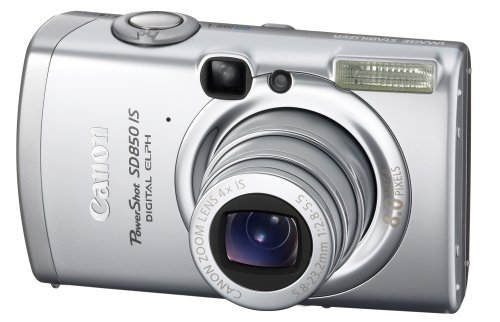
Canon PowerShot SD850 IS 8.0 MP Digital Elph Camera with 4x Optical Image Stabilized Zoom

Product Description

Canon PowerShot SD850 IS Digital ELPH camera has an impressive array of top-tier photo features including an advanced ultra-compact zoom lens and optical viewfinder to easily capture, record and share brilliant images under a full range of shooting conditions, all within a curvaceous, eye-catching compact design. It is a digital camera that will really get your creative juices flowing.
It starts with a high resolution 8.0 Megapixel CCD, a 4x Optical Zoom with Canon's exclusive UA Lens and an Optical Image Stabilizer for steady zooming. There's also a DIGIC III Image Processor with Face Detection and Red-eye correction, an ISO 1600 setting for sharper images in low light, 5 Movie Modes and a 2.5-inch PureColor LCD with scratch-resistant, anti-reflective coating for easy viewing.

Features:
  • 8.0-megapixel CCD captures enough detail for photo-quality 16 x 22-inch prints
  • 4x Optical Image Stabilized zoom for steady, long zoom shooting- High-resolution 2.5-inch PureColor LCD with scratch-resistant, anti-reflection coating
  • Sensitivity range to ISO 1600 for sharper photos in low light
  • Print/Share Button for easy direct printing and downloading
Additional Features:
  • Still Resolution - Up to 3,264 x 2,448 (Large), 3,264 x 1,832 (Widescreen) - 16 - 9
  • Movie modes - 640 x 480 / 320 x 240 (30 fps/15 fps) available up to 4GB or 60 minutes, 640 x 480 (2 hours at 0.5 fps/1 fps), 320 x 240 (1 min. at 60 fps), 160 x 120 (3 min. at 15 fps)
  • On camera editing Windows and Macintosh capable
  • Computer Interface - USB 2.0 Hi-Speed (mini-B jack);
  • Video Out - NTSC/PAL (connect cables included);
  • Audio Out - Monaural
  • Power Source - 1. Battery Pack NB-5L; 2. AC Adapter Kit ACK-DC30 (both included)
  • Unit Dimensions (W x H x D) - 3.56 x 2.22 x 1.04 in./90.4 x 56.5 x 26.4mm;
  • Weight - Approx. 5.82 oz./165g (camera body only)

Product Pros and Cons:

  • PROS:
    FAST: Very fast. Not quite as fast as the SD 800 IS, but faster than almost any other point and shoot digital camera you will find. Considerably faster than the Panasonic.
    PROCESSOR: Excellent super sharp photos in a wide variety of conditions.
    LENS: This is a very nice range lens with excellent edge to edge sharpness that performs very well in a variety of conditions.
    SIZE: very small, fits anywhere. Marginally smaller than the SD 800 IS, which itself is a small camera. The SD 800 IS and the SD 850 IS take different batteries because the SD 850 IS is marginally smaller. Extremely pocketable.
    VIEWFINDER OPTIONS: Optical viewfinder, the screen is so good that you don't use this that often, but it is nice to know it is there for those really really sunny days (and they come up every so often).
    BATTERY: Battery life is exceptional. Camera seems to go on for months with one battery (I think it is rated for 400+ shots, which is an astounding battery life for such a small camera).
    CONTROLS: I would say of the three cameras, this one had the best layout of controls. The half hidden wheel on the back is an excellent design touch and the on/off button, while not where you would expect it to be, prevents accidental on/off switching. A very well laid out camera from the ergonomic standpoint. Also, the four way control pad has an external touch sensitive ring which is pretty cool (when it works well) but Canon maintains its highly regarded and often imitated control layout on this little gem.
  • NEUTRAL:
    APPEARANCE: The looks of the camera. I prefer black cameras as I used to own a film SLR and black cameras remind me of that beloved camera. However, my wife seems to like the looks of this camera.
  • CONS:
    LIMITED ZOOM: Would like a drop more zoom range, perhaps a 5x - 6x would be preferable. The replacement model for this (890) has a 5x zoom, but from initial reviews, the 890's performance is not quite as good as that of this camera.
    FLASH: Flash is a little weak, but this is par for the course on a point and shoot.
    OPTICAL VIEWFINDER: Optical viewfinder is really small, is off center and not useful for every time composure on this camera, the camera is made to be used with the LCD on.
    Can't go wrong with either this or the SD 800IS, as they are essentially the same camera with different lenses, it just depends on whether you want a wide angle lens or not.
    Good luck with your shopping.